📄 Digital book in PDF · read it on your phone or print it
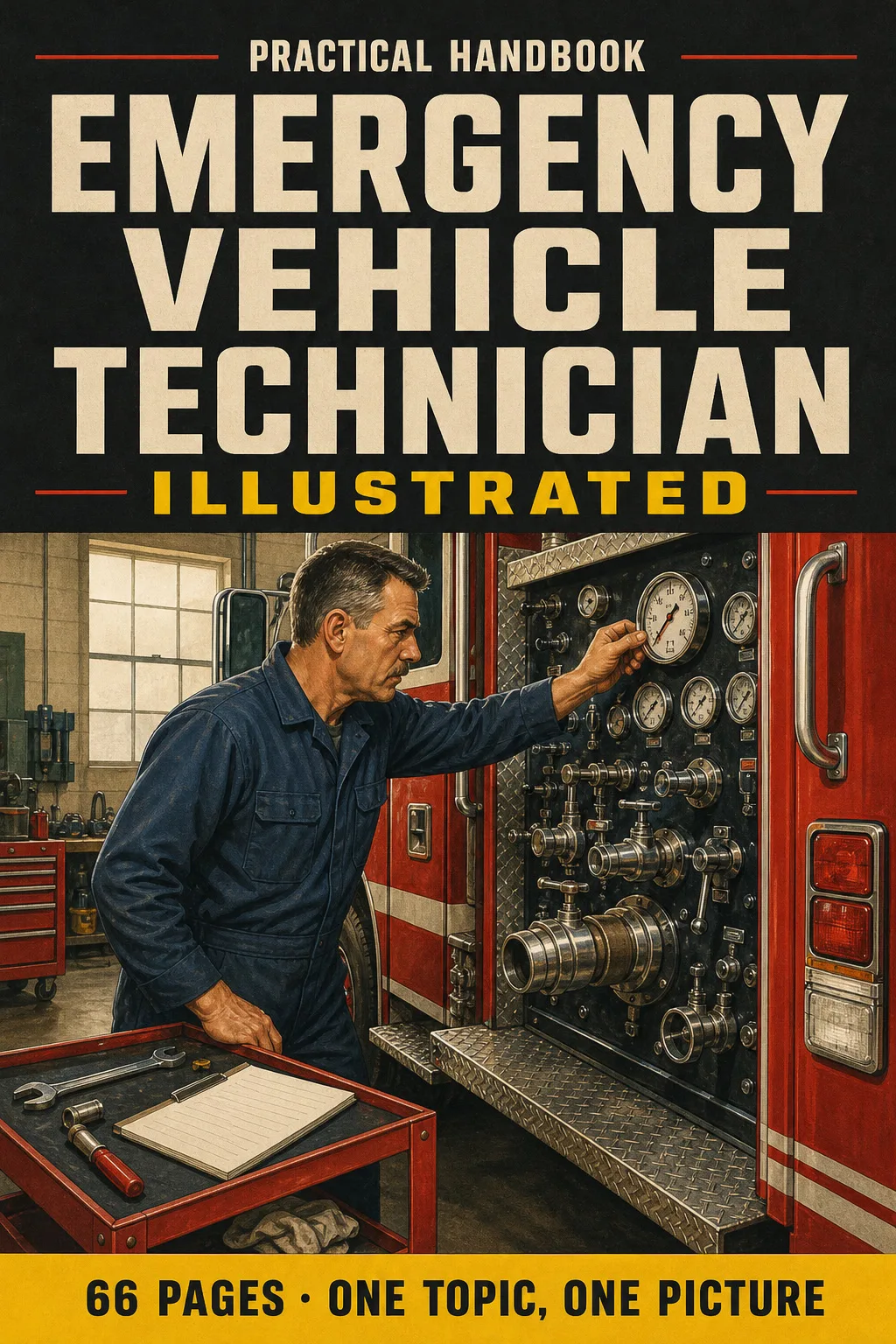
Centrifugal pumps, the transfer valve, primers, pressure governors, aerial hydraulics, air brakes, load managers and ambulance module systems. Every topic gets its own page: the drawing first, then what you need to remember. 66 illustrated pages.
🔒 Secure checkout · PDF by email · 30-day guarantee
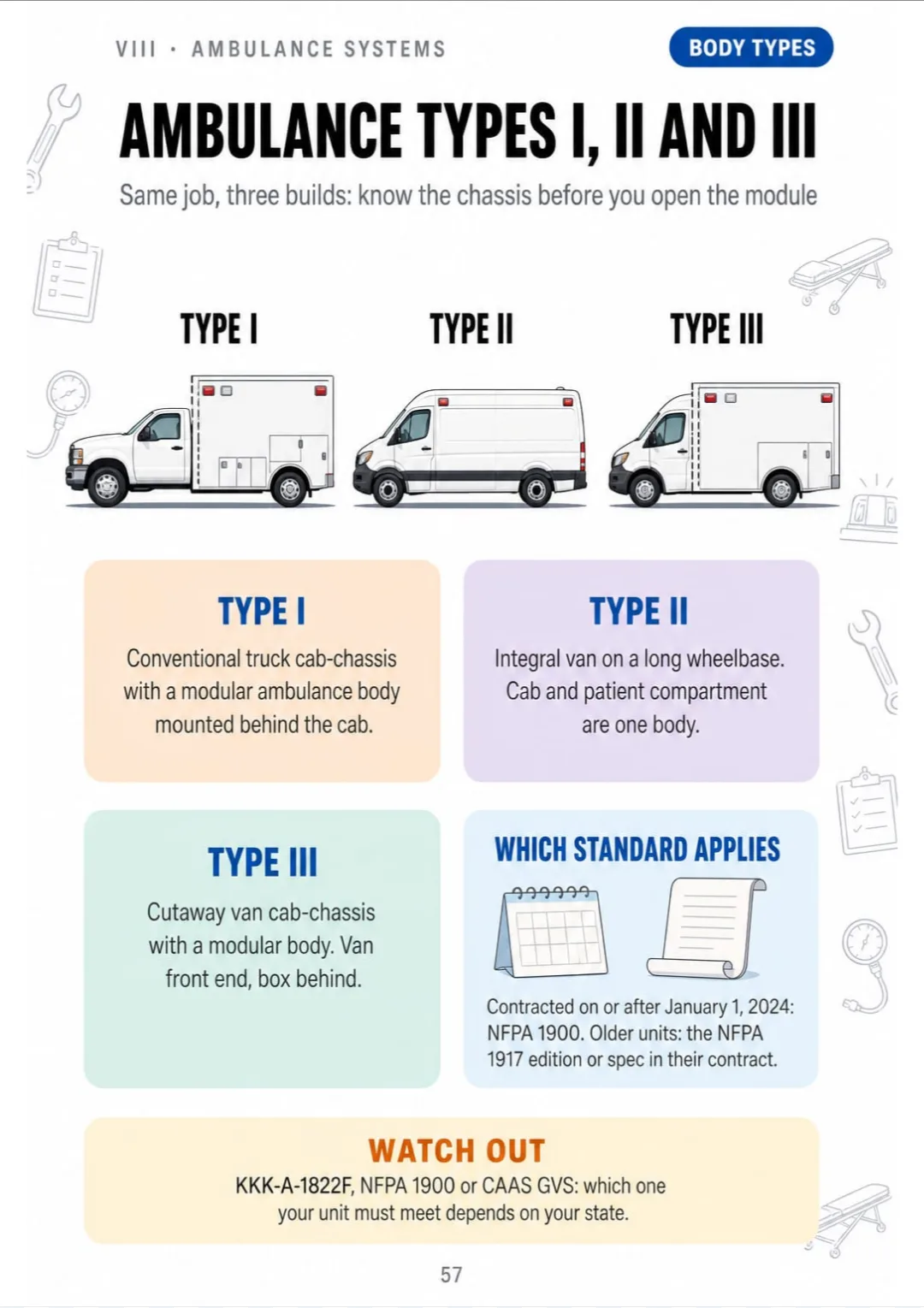
Every page has one big drawing and a box with the numbers and test steps you need to know:


Swipe to see more →
These are real pages from the book. The table of contents is the full one: 9 parts and 62 topics.
You're at the draft pit with the hard suction on. The primer is running, the intake gauge won't drop into vacuum, and the captain is standing right behind you.
The manual covered priming in four paragraphs about atmospheric pressure and positive displacement. Nothing about where the air is actually getting in.

In the book, the priming system is one page: the primer motor, the priming valve and the 3 intake leak points to check first, drawn on the pump the way you see it behind the panel.
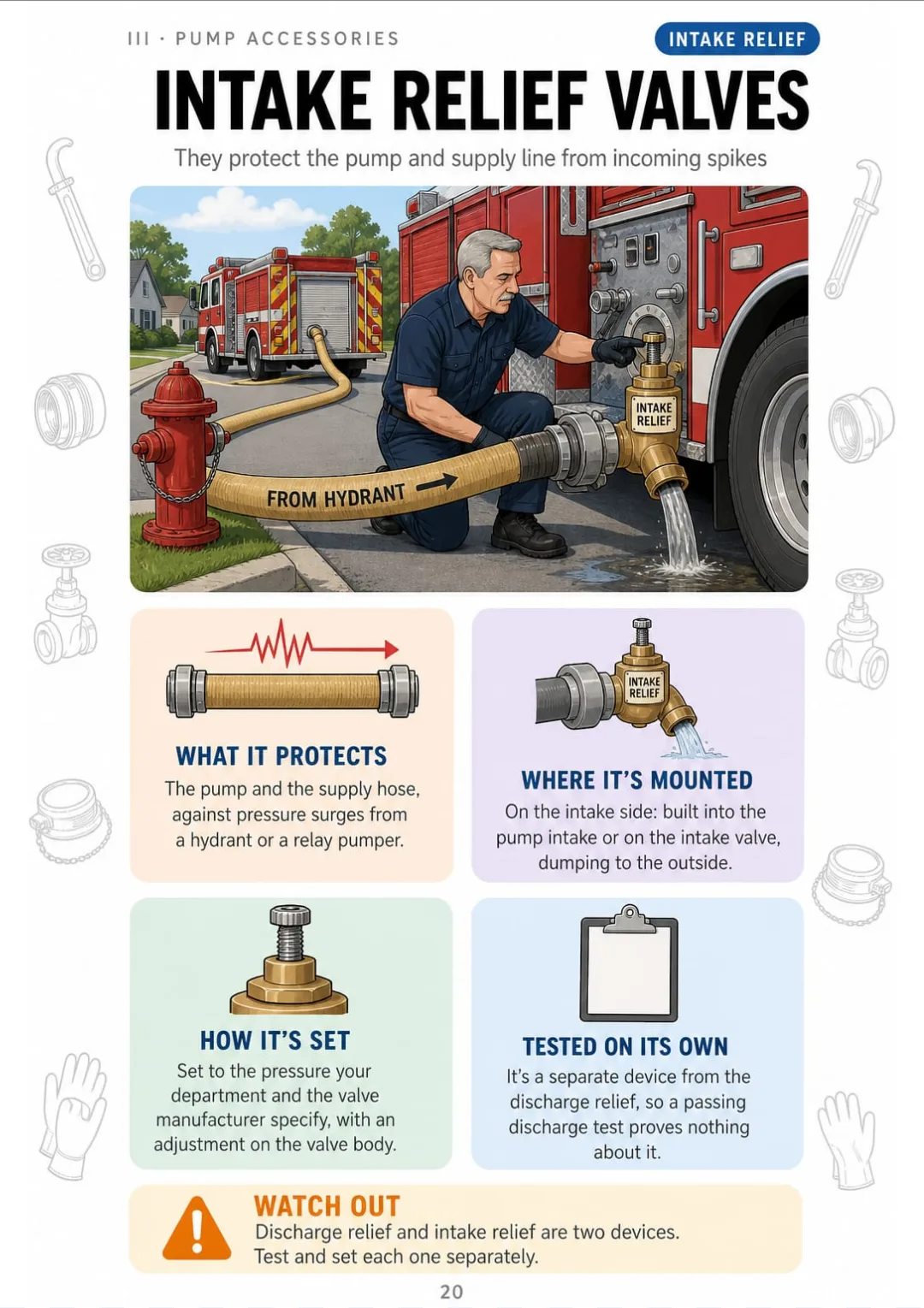
The transfer valve, the electronic pressure governor, the intake relief valve, air brake cut-in and cut-out, voltage drop testing: each one gets its own page, laid out the same way.
You look at the drawing, you recognize the part you've already had in your hands, and you find the leak without going back to the manual.

The EVT map, fire pump fundamentals, pump accessories, pump testing, aerial devices, chassis and air brakes, 12 V electrical, ambulance systems and shop review: 66 pages, all illustrated.
Think of it this way:
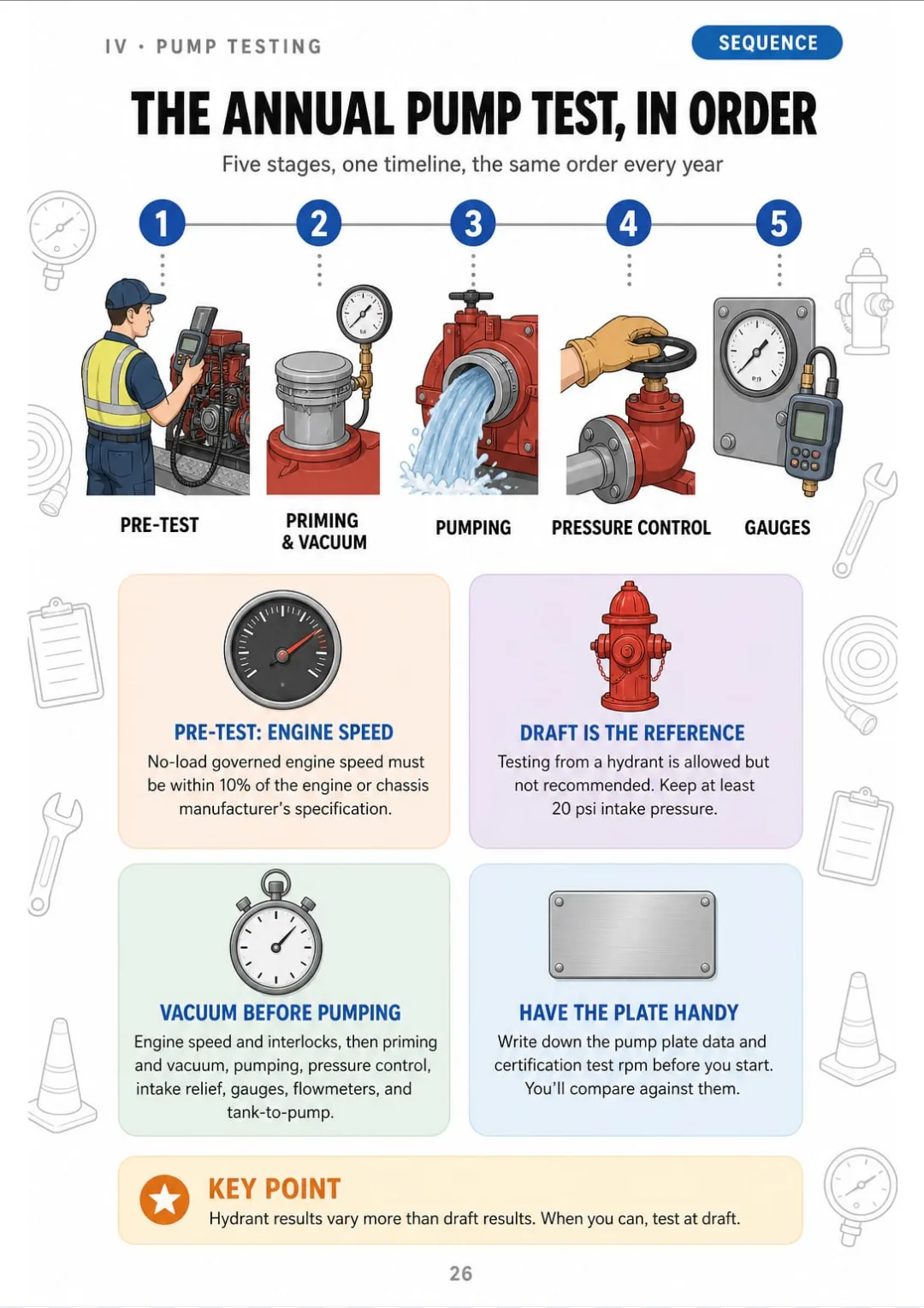
It's the annual pump service test. The officer has the test sheet in his hand and wants to know what comes next after priming and vacuum.
You open the page for the annual pump test and see it on one timeline: pre-test, priming and vacuum, pumping, pressure control, gauges, in the NFPA 1910 order.

Same with the transfer valve, slack adjusters and pushrod stroke, load managers, the ambulance oxygen leak test and aerial holding valves: each one on its own page, in the same 4 steps.
Emergency Vehicle Technician Illustrated is 9 parts and 62 topics, all drawn, and it closes with a quick review of the numbers to keep handy.
What you see drawn, you don't have to memorize.
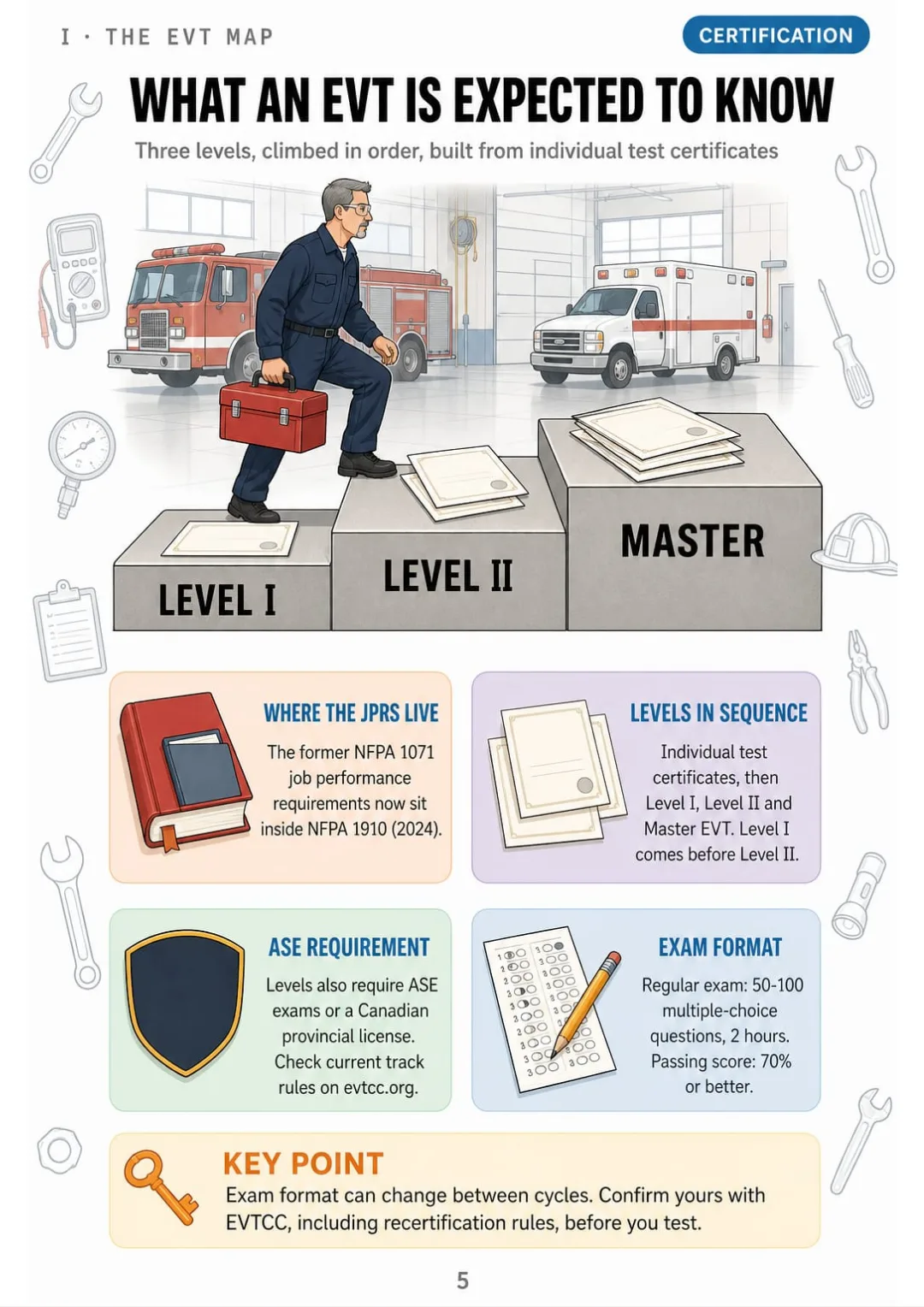
What an EVT is expected to know, which NFPA standard covers what, the apparatus and ambulance series, the 4-step page and the units you'll see on every page.
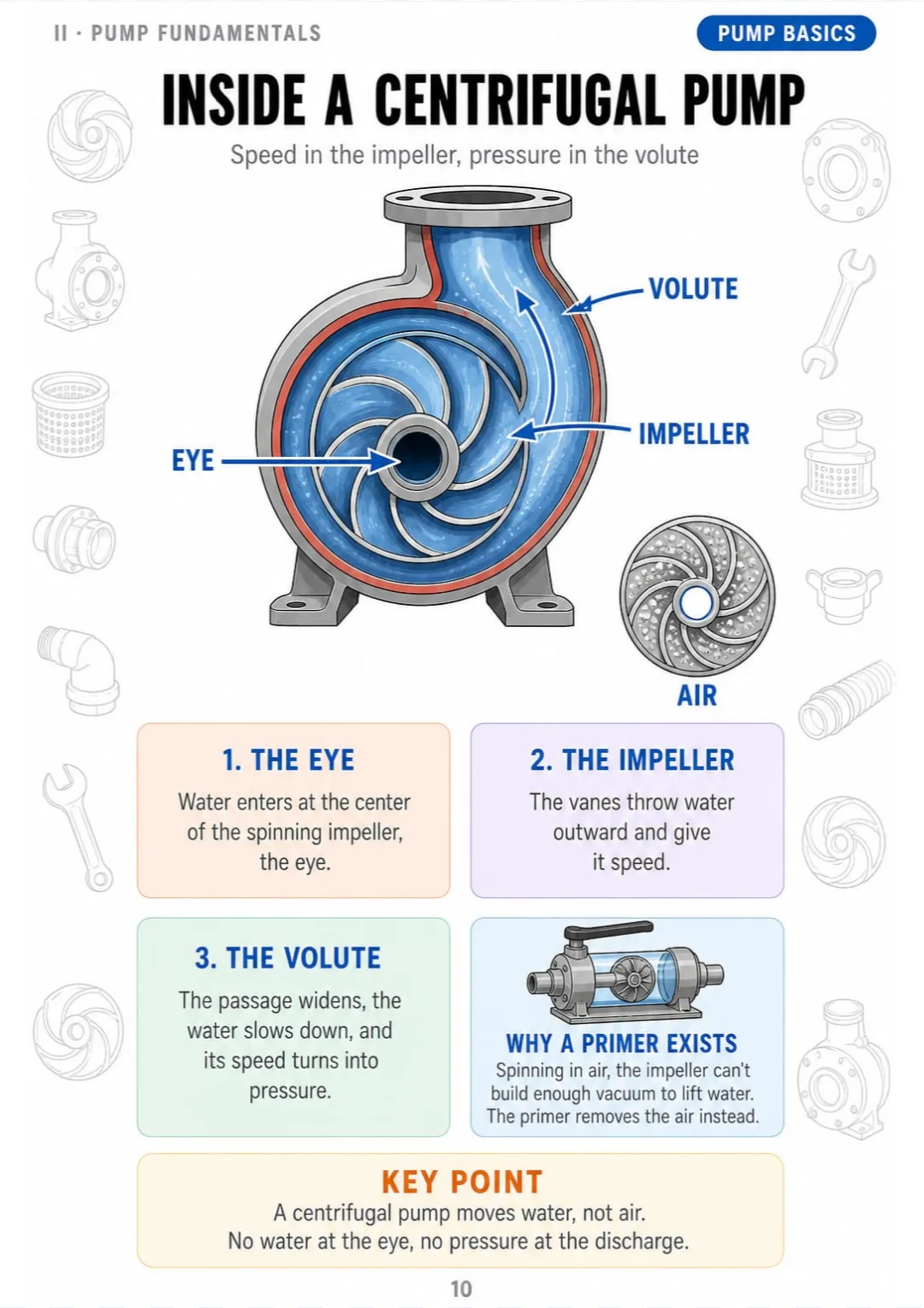
Inside the centrifugal pump, net pump pressure vs. discharge pressure, the 100/70/50 capacity curve, two-stage pumps, the transfer valve, PTO and split-shaft, interlocks and cavitation.
The priming system, pressure and intake relief valves, electronic pressure governors, tank-to-pump and tank fill, the pump panel, foam proportioning and CAFS.
The annual pump service test step by step: pumping, pressure control, vacuum and priming, drafting setup, pitot tubes and flowmeters, and what to do when a pump fails.
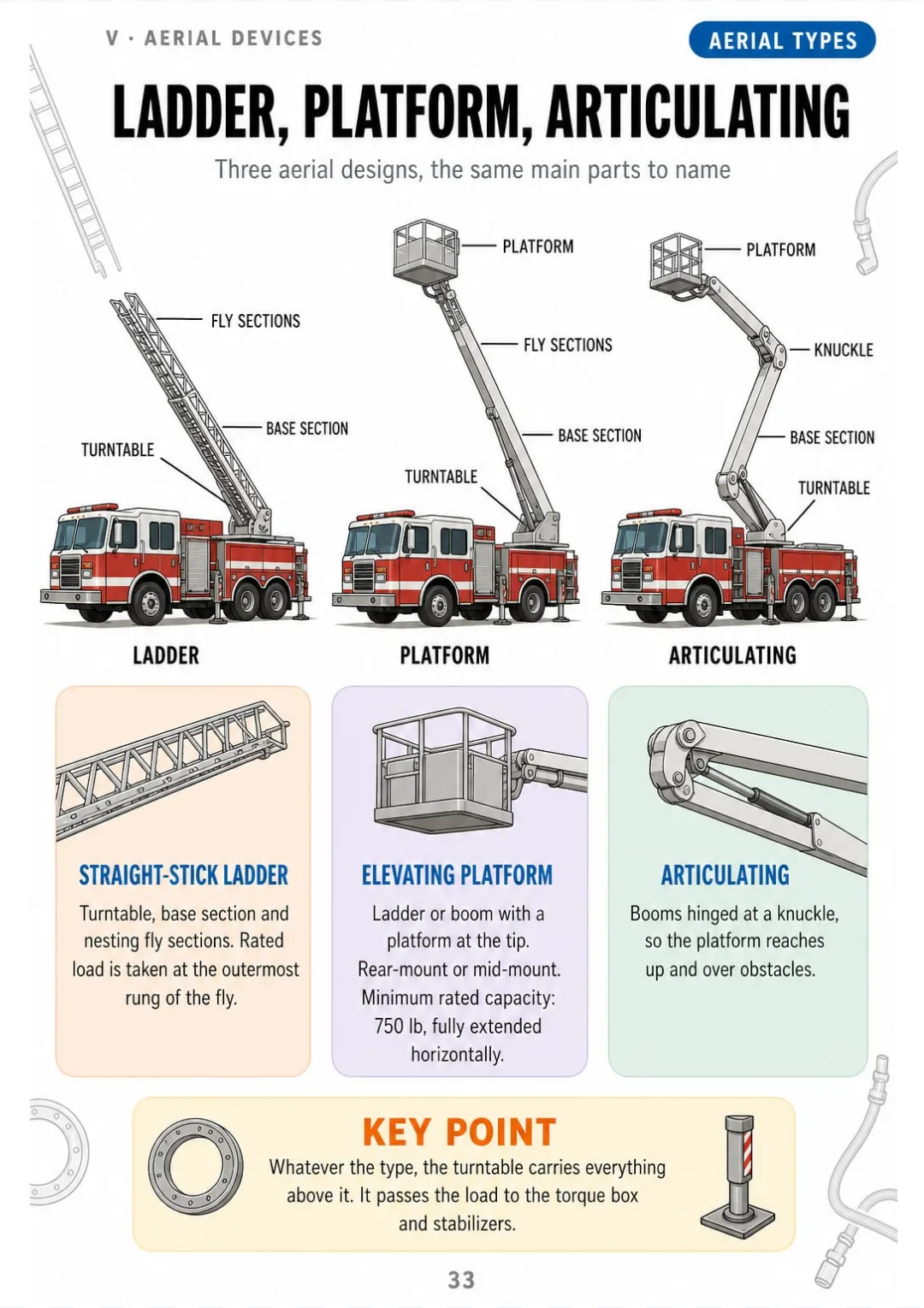
Ladder, platform and tower, rated load and the load chart, stabilizers and interlocks, the hydraulic circuit, holding valves, turntable and bolts, cables and sheaves, annual and 5-year testing.
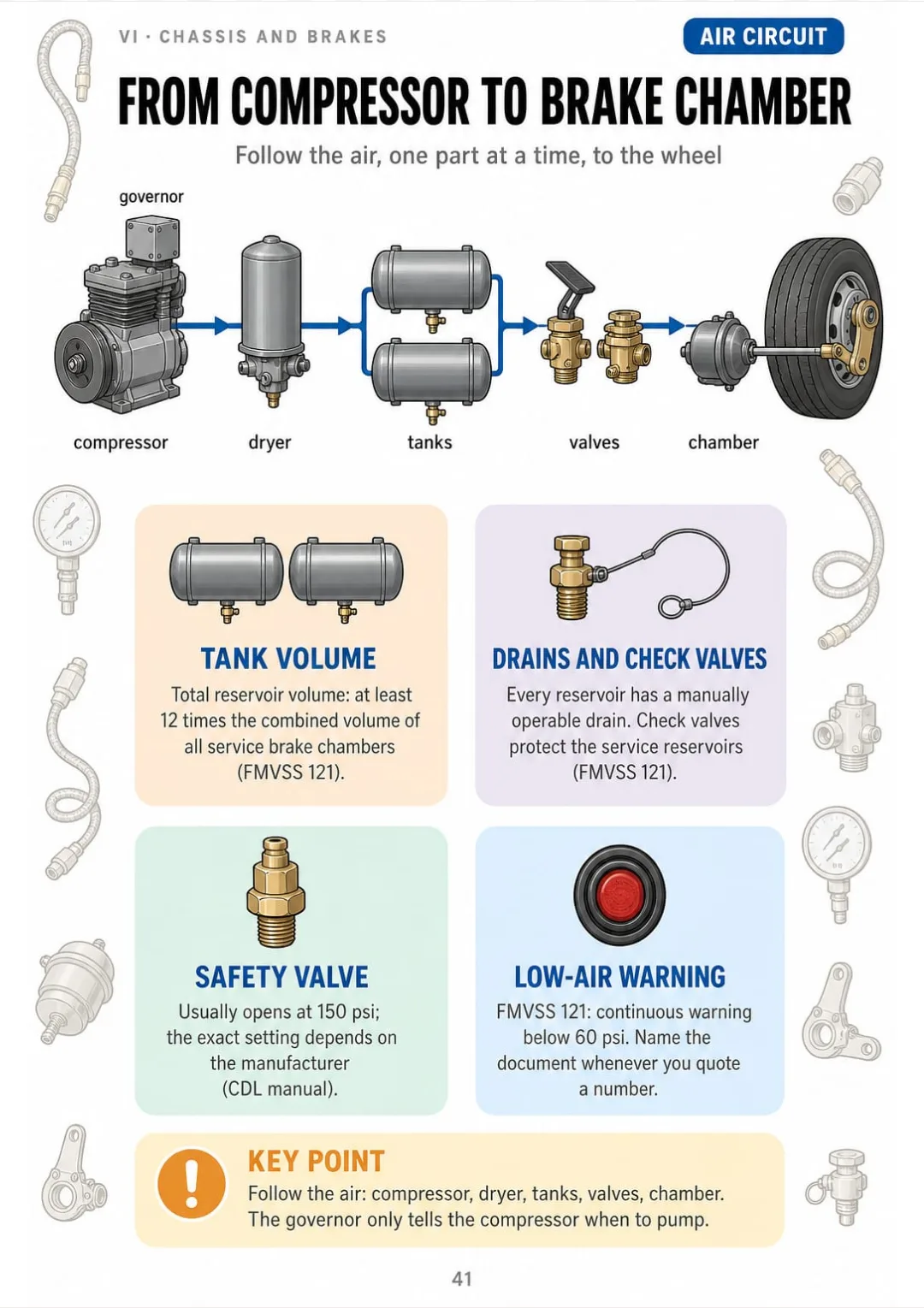
The air system from compressor to chamber, governor cut-in and cut-out, build-up and leakage tests, spring brakes, slack adjusters, ABS and air dryers, retarders, tires and out-of-service conditions.
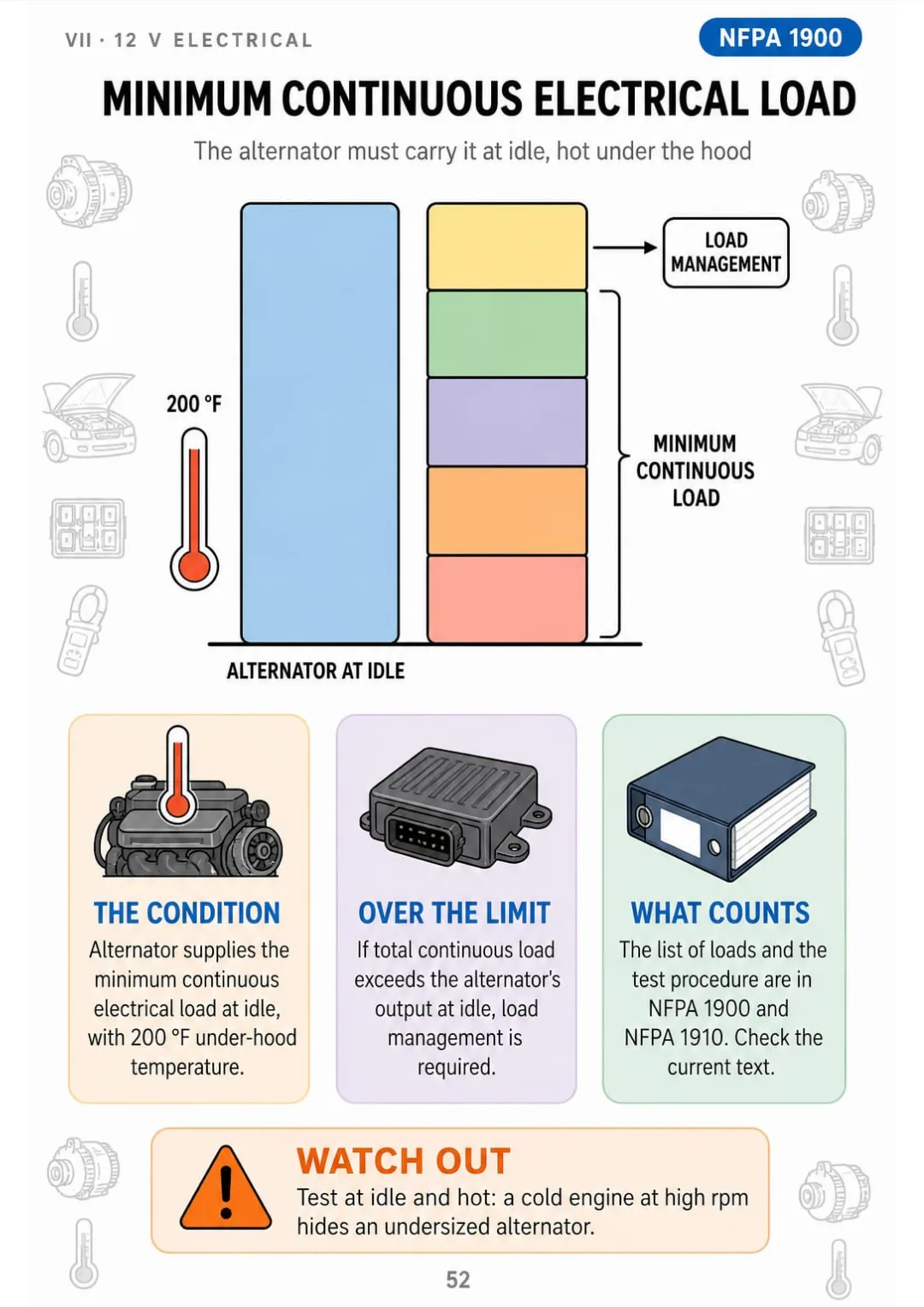
Ohm's law at the truck, voltage drop, batteries and alternators, minimum continuous electrical load, load managers, multiplex and CAN bus, warning lights, shoreline, generators and inverters.
Type I, II and III ambulances, the module electrical system and disconnect, the oxygen system and leak test, patient compartment HVAC, cot mounts and occupant restraints.
Who checks what daily, weekly and annually, out-of-service criteria at a glance, records, lockout and blocking, and the numbers to keep handy.
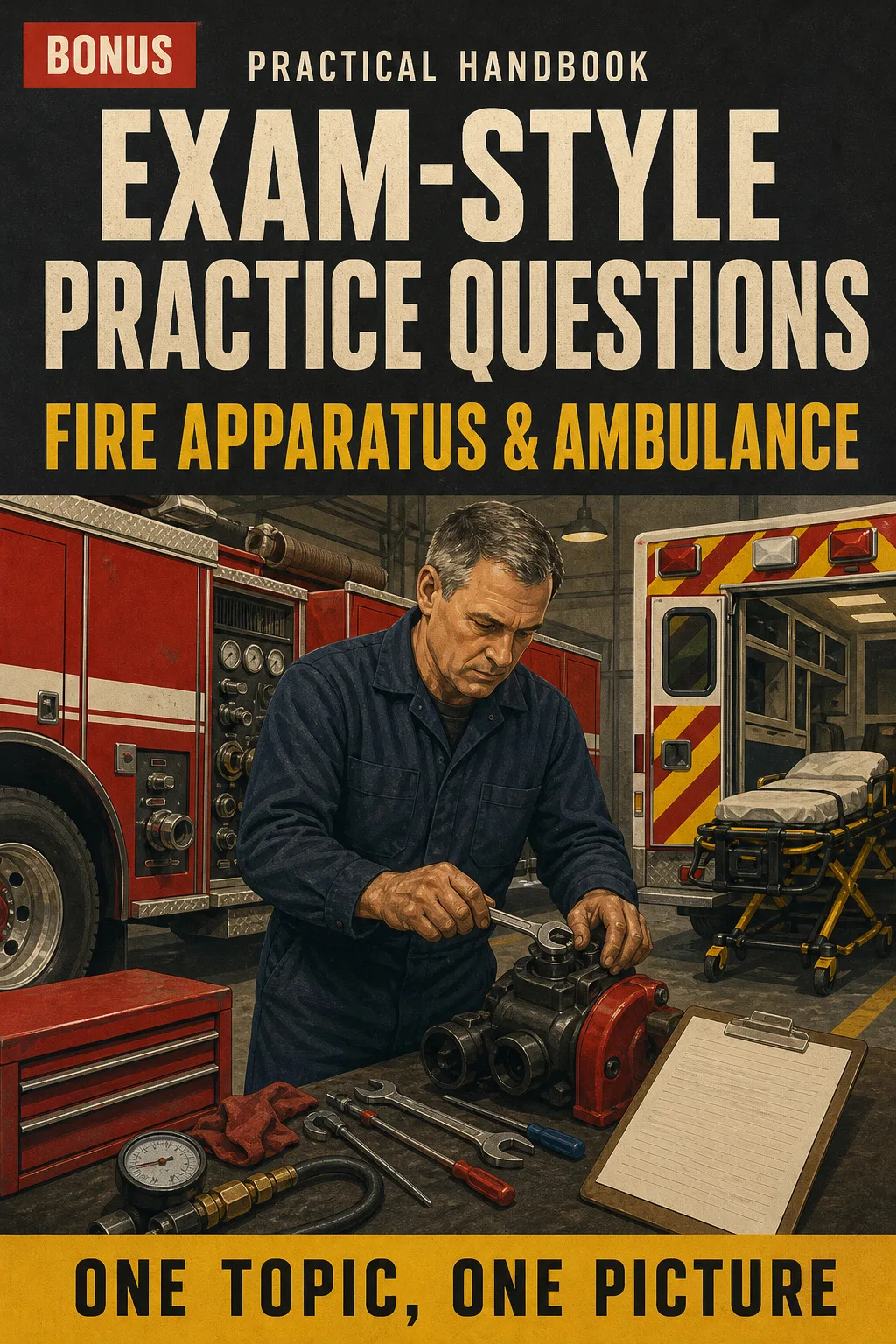
Test yourself system by system with exam-style questions, each with the answer and the page where it's explained, so you know what you've got down and what to review again.

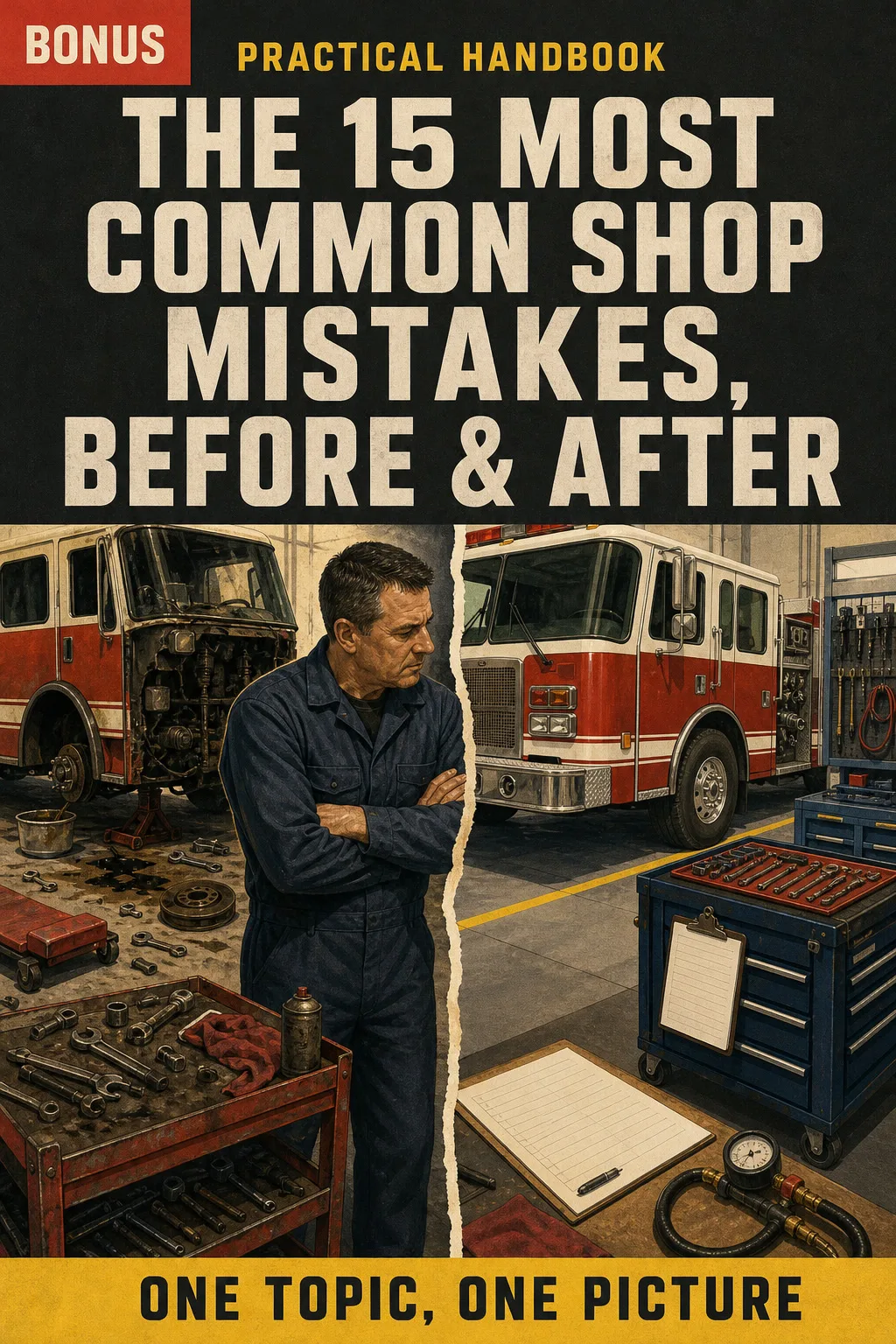
See the most common mistakes on pumps, aerials, air brakes and 12 V circuits drawn side by side with the right way, so you catch them before they show up on the exam or on the truck.
📄 This is a digital PDF book sent to your email: nothing is printed or shipped.
PDF by email: We email you Emergency Vehicle Technician Illustrated as a PDF, together with the two free books. It's a single payment: no installments, no extra charges.
Every system on its own page, in the same 4 steps: what it is, how it works, what fails, how it's tested. You study at night and the next day it's still in order.
You flip through the drawings and the numbers boxes for a fast review, then check yourself with the exam-style practice questions.
Print the pages and keep them on the bench: the pump test sequence, the air brake circuit and the 12 V checks, there when you need them.
📄 This is a digital PDF book sent to your email: nothing is printed or shipped.
Try Emergency Vehicle Technician Illustrated for 30 days, bonus books included.
We refund everything if the file won't open, if the book isn't what you see here, if you were charged twice or if the email doesn't arrive. Just email us.
You pay once. No subscriptions.
Yes. It's not a beginner's book: each system is drawn the way it sits on the truck, so you build on the parts you already know and focus on what's specific to apparatus and ambulances.
It's checked against NFPA 1900 (2024 edition, which consolidates the former 1901 and 1917, among others), NFPA 1910 (2024 edition, which consolidates the former 1911, among others), NFPA 1071, FMVSS 121 and the CVSA out-of-service criteria for air brakes. Topics follow the fire apparatus and ambulance EVT series; check the Commission's current reference list for your test.
No. It's independent study material, not affiliated with or endorsed by NFPA, the EVT Certification Commission or any certifying body. It doesn't give you a certificate or EVT credit: certification only comes from passing the EVT exams.
No. It helps you organize and review what you study. It doesn't replace formal training, shop practice, the manufacturer's service manuals or the standards themselves.
No. They're exam-style questions written for this book, for both fire apparatus and ambulance topics, each with the answer and the page where it's explained. They come in the bonus book, included with your purchase. They aren't official questions from any exam.
It comes as a PDF by email, to the address you enter at checkout. It's a one-time payment, with no subscription.
Fire apparatus systems (pumps, aerials, chassis and air brakes, 12 V electrical) and ambulance systems, checked against the NFPA standards listed above. It doesn't follow any official test outline one to one: compare the index with the test you're taking before you buy.
Yes. The PDF is printable, so you can print the whole book or just the pages you want to keep in the shop.
You have 30 days. We refund everything if the file won't open, if the book isn't what you see on this page, if you were charged twice or if the email doesn't arrive: just email us.
No more rereading the chapter and keeping nothing.
The transfer valve? You see it drawn, and that's it.
You walk into the EVT exam knowing where everything is.
Drawings make studying faster.
The book is right below.
One-time payment: US$ 27 · Guarantee: 30 days · PDF by email
YES, I WANT EMERGENCY VEHICLE TECHNICIAN ILLUSTRATED FOR US$ 27📄 This is a digital PDF book sent to your email: nothing is printed or shipped.